

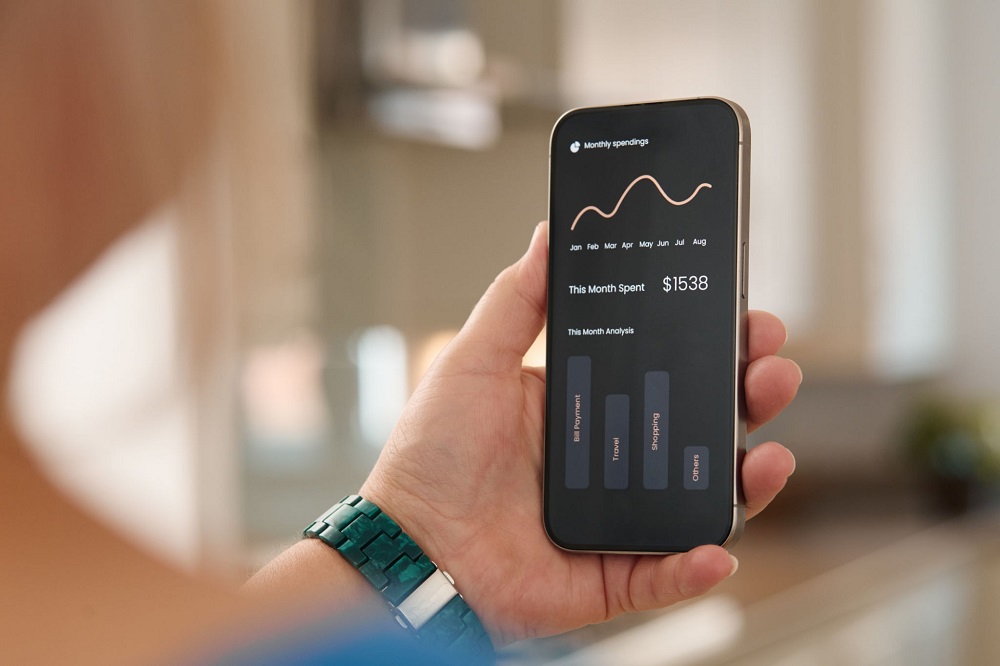
Managing personal finances has historically been a tedious task characterized by manual balance tracking, physical spreadsheets, and stressful monthly budgeting sessions. For decades, achieving financial security required significant time, mathematical diligence, and constant self-discipline. However, the intersection of advanced technology and personal finance has initiated a monumental shift. The rise of financial automation and smart money management tools is completely changing how individuals interact with their wealth.
Modern consumers are no longer required to actively micromanage every dollar they earn. Sophisticated financial ecosystems now handle the repetitive, administrative components of money management behind the scenes. By removing human friction, decision fatigue, and emotional bias from the financial equation, automation allows individuals to build wealth efficiently and maintain consistent financial health with minimal effort.
The Core Mechanisms of Financial Automation
At its foundation, financial automation operates by taking the choice out of routine financial obligations. Instead of relying on willpower to save money or memory to pay utility bills on time, users configure a structured digital pathway that routes capital automatically the moment a paycheck arrives.
Streamlining Regular Bill Payments
Missing a bill payment carries immediate consequences, including late fees, service disruptions, and severe drops in credit scores. Automating recurring liabilities ensures that essential obligations are settled on time every month.
- Fixed Monthly Expenses: Utility bills, rent or mortgage payments, insurance premiums, and subscription services can be linked directly to a checking account or credit card.
- Credit Card Balances: Setting up automatic payments for either the minimum balance or the full statement balance protects consumers from predatory interest charges and negative credit reporting.
Seamless Wealth Accumulation via Automated Savings
The traditional approach to saving money involves spending throughout the month and putting whatever remains into a savings account. This method frequently fails because discretionary spending naturally expands to consume available funds. Financial automation reverses this philosophy through a concept known as paying yourself first. By scheduling an automatic transfer from your primary checking account to a high-yield savings account or an investment portfolio on the exact day your income hits, the money is secured before you ever have the opportunity to spend it.
The Transformation of Budgeting via Smart Applications
Traditional budgeting methods, such as tracking expenses in a physical notebook or inputting receipt details into a desktop spreadsheet, suffer from high abandonment rates. The effort required to maintain these systems manually often leads to burnout. Smart money management platforms have solved this issue by providing automated, real-time oversight of consumer spending.
Algorithmic Transaction Categorization
Modern financial applications securely link directly to user bank accounts and credit cards using secure data networks. Every time a transaction occurs, artificial intelligence algorithms analyze the merchant data and instantly sort the expenditure into designated categories like groceries, transportation, dining out, or entertainment. This eliminates manual logging entirely, presenting users with an accurate, real-time visual breakdown of their monthly spending habits through intuitive charts and dashboards.
Proactive Budgetary Alerts and Insights
Smart budgeting platforms move beyond passive observation by actively protecting users from overspending. Rather than discovering you overspent on dining out at the end of the month, these platforms monitor your category limits in real time. If your spending velocity indicates you will breach a budget threshold before the billing cycle concludes, the application delivers targeted alerts to your smartphone, encouraging immediate behavioral adjustments.
Robo-Advisors and the Democratization of Investing
Investing was once perceived as a complex, exclusive domain reserved for wealthy individuals who could afford the steep fees of professional wealth managers. The rise of automated investment platforms, commonly referred to as robo-advisors, has thoroughly disrupted this paradigm, making sophisticated wealth management accessible to anyone with a smartphone.
Automated Portfolio Construction and Allocation
When a user registers with a robo-advisor, the platform administers a brief diagnostic questionnaire to evaluate the individual financial goals, timeline, and personal risk tolerance. Based on this profile, proprietary algorithms instantly construct a diversified investment portfolio utilizing low-cost Exchange-Traded Funds (ETFs) spanning global equities, real estate, and fixed-income bonds.
Hands-Free Portfolio Maintenance
Maintaining a balanced investment strategy requires ongoing adjustments, which can be mechanically complex for casual investors. Robo-advisors handle these processes automatically through two primary features.
- Automatic Rebalancing: Over time, market movements cause certain assets to outperform others, shifting the original risk profile of the portfolio. The algorithm monitors this drift and automatically buys or sells assets to restore the intended target allocation without triggering human intervention.
- Tax-Loss Harvesting: Advanced algorithms continuously monitor the portfolio for depreciated assets. The system can strategically sell these specific investments at a loss to offset capital gains taxes, immediately reinvesting the proceeds into similar assets to maintain market exposure while maximizing tax efficiency.
Behavioral Economics and Micro-Automation
One of the greatest hurdles to financial security is human psychology. Concepts like present bias cause individuals to value immediate gratification over long-term financial stability. Financial micro-automation leverages these psychological tendencies to build wealth through imperceptible, frictionless actions.
Round-Up Savings Mechanics
Micro-investment platforms have popularized the concept of automated spare change accumulation. When a user links their everyday debit or credit card to the application, the system rounds up every purchase to the nearest dollar. For example, buying a coffee for three dollars and fifty cents triggers an automatic round-up of fifty cents, which is pulled from the user checking account and deposited straight into a savings vehicle or investment fund. Because the individual amounts are small, the user rarely notices the impact on their daily cash flow, yet these micro-transactions compile into significant capital over time.
Smart Micro-Tenders and Behavioral Nudges
Advanced systems analyze cash flow patterns to identify hidden savings opportunities. If the software notices a temporary surplus in a user checking account due to reduced spending over a three-day window, it can execute a micro-transfer of twenty or thirty dollars into a retirement fund automatically. These algorithmic interventions capitalize on moments of low financial friction to accelerate progress toward long-term benchmarks.
Security, Privacy, and the Risks of Over-Automation
While the benefits of financial automation are extensive, total reliance on technology introduces distinct vulnerabilities that users must actively manage to protect their personal data and financial well-being.
Data Security and Open Banking Protocols
Linking multiple accounts to centralized applications requires sharing sensitive financial data. To safeguard these pathways, reputable financial technology platforms utilize advanced encryption protocols and tokenized credential validation systems. Users must verify that the applications they select employ enterprise-grade security measures and multi-factor authentication to defend against potential data breaches.
The Danger of Financial Disconnection
The primary risk of total automation is the psychological detachment it can foster. When bills are settled, savings are captured, and investments are managed completely hands-free, individuals can easily stop looking at their accounts entirely. This lack of oversight can lead to undetected subscription leakages, unrefined spending behaviors, or a failure to realize that an emergency fund has been depleted. Automation is a powerful vehicle for operational efficiency, but it must never completely replace active strategic review.
Frequently Asked Questions
What happens if an automated bill payment triggers a bank account overdraft?
If an automated transaction executes when the underlying checking account lacks sufficient funds, the financial institution will either reject the payment or process it, driving the balance into negative territory. In both scenarios, the consumer faces substantial penalties, including non-sufficient funds fees from the bank, late payment fees from the merchant, and potential overdraft interest charges. To mitigate this risk, users should maintain a financial cushion in their primary account or establish automated balance alerts.
How do high-yield savings accounts differ from traditional savings accounts within automated frameworks?
Traditional brick-and-mortar institutions frequently offer negligible interest rates on standard savings accounts, often hovering near zero percent. High-yield savings accounts, primarily offered by digital banks with low overhead costs, pay significantly higher interest rates. When automated transfers are routed into a high-yield vehicle rather than a legacy account, the compounding effect of the increased interest dramatically accelerates the growth of the capital over identical time horizons.
Can automated investing platforms completely replace human financial advisors?
Robo-advisors excel at executing standardized mathematical tasks, including index portfolio diversification, asset rebalancing, and tax optimization at a minimal cost. However, they lack the emotional intelligence and holistic analytical capabilities of human advisors. Human professionals remain essential for complex, highly individualized scenarios such as intricate estate planning, navigating corporate tax structures, managing generational wealth transfers, and providing behavioral coaching during severe market panics.
What is the mechanical process behind tax-loss harvesting in automated systems?
Tax-loss harvesting involves an algorithmic system identifying specific securities within a portfolio that have declined below their original purchase price. The system automatically sells these underperforming assets to realize a capital loss, which can be used to harvest tax deductions against capital gains or ordinary income. The platform then immediately uses the proceeds to purchase a highly correlated but distinct asset to ensure the overall structural allocation of the portfolio remains intact.
How often should an individual review their automated financial configurations?
While automation reduces the daily operational burden, users should perform a thorough audit of their entire financial ecosystem at least once every quarter. This routine check ensures that old or unwanted subscriptions are canceled, automated savings rates are scaled upward in accordance with recent salary increases, and portfolio risk parameters are adjusted to mirror shifts in long-term personal objectives.
Are automated micro-savings platforms efficient enough to replace traditional retirement planning?
Micro-savings tools and round-up applications serve as excellent introductory instruments for building initial savings habits, but they are fundamentally insufficient as a standalone retirement strategy. The small capital amounts generated by spare change round-ups cannot match the substantial investments required to secure retirement stability. These tools should be viewed as supplementary enhancements to structured vehicles like employer-sponsored retirement plans or individual retirement accounts.